

Peptide Purity: Ensuring Accurate Research Outcomes

Updated: Sep 5
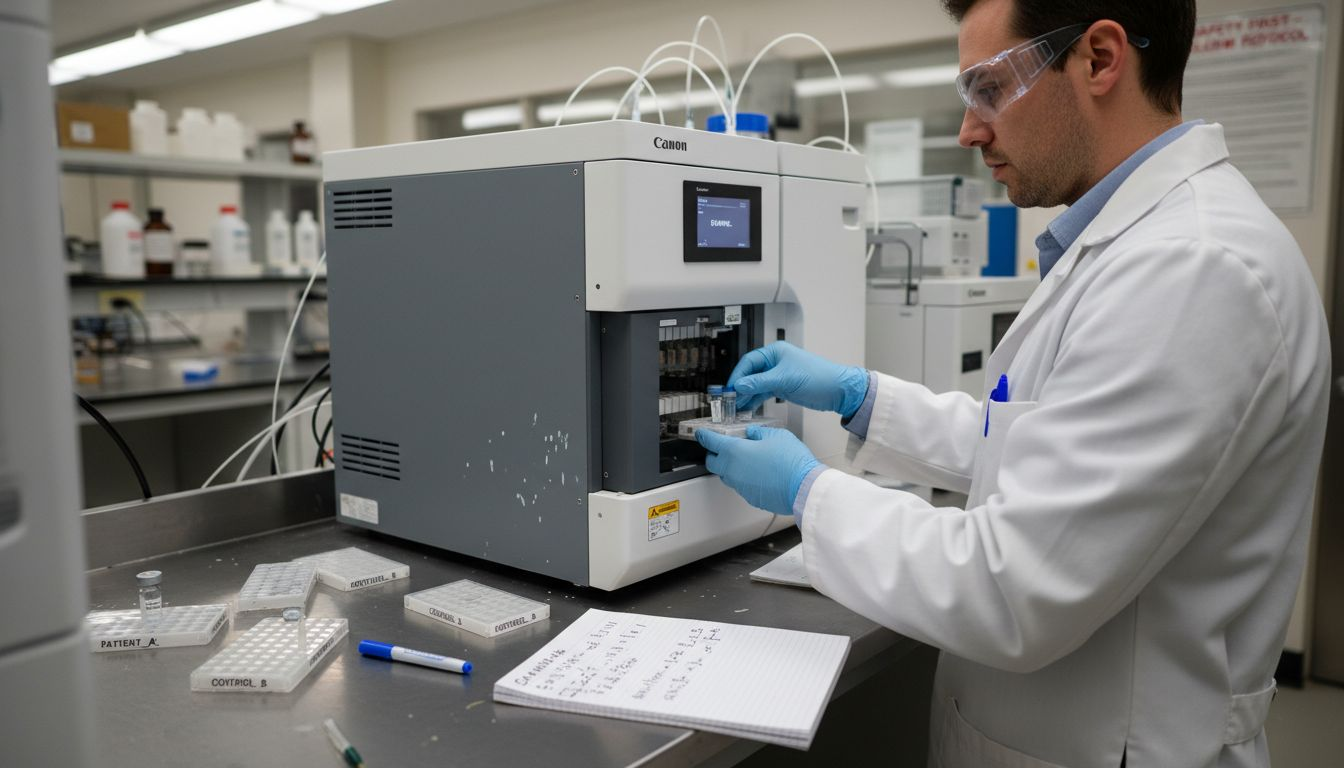
Finding true high-purity peptides for experimental validation is seldom as simple as reading a label on a vial. For research scientists in the United States committed to advancing biomedical discovery, the stakes are high when impurities—even in small amounts—can alter molecular behavior and undermine study results. This article clarifies what peptide purity means and uncovers common misconceptions, helping you ensure that your experiments are backed by authentic, rigorously verified peptides.
Table of Contents
Key Takeaways
Point | Details |
Importance of Peptide Purity | Peptide purity is essential for experimental reproducibility and validity, necessitating comprehensive analytical evaluation. |
Common Misconceptions | Researchers often misinterpret peptide purity as a flawless percentage, ignoring the complexities and potential impacts of impurities. |
Risks of Impurities | Impurities can compromise research integrity by introducing variability, misrepresentation, and unexpected biological responses. |
Supplier Compliance Standards | Adherence to strict quality management and compliance standards is crucial for ensuring the reliability of research-grade peptides. |
Defining Peptide Purity and Common Misconceptions
Peptide purity represents a critical parameter in scientific research, defining the proportion of the target peptide molecule compared to potential impurities. Precise purity assessments enable researchers to understand the true composition and quality of their peptide samples, which directly impacts experimental outcomes and reproducibility.
Researchers often misunderstand peptide purity as a simple percentage, when in reality, it involves complex analytical techniques to verify molecular integrity. Common misconceptions include:
Believing a “99% pure” peptide means the sample is essentially perfect
Assuming all impurities are inconsequential to research results
Overlooking the potential variability in synthesis byproducts
Typically, peptide purity is determined through advanced analytical methods like high-performance liquid chromatography (HPLC) and mass spectrometry. These techniques reveal not just the overall purity percentage, but also the specific nature and quantity of potential contaminants. A truly high-quality peptide requires more than a simple numerical purity rating.
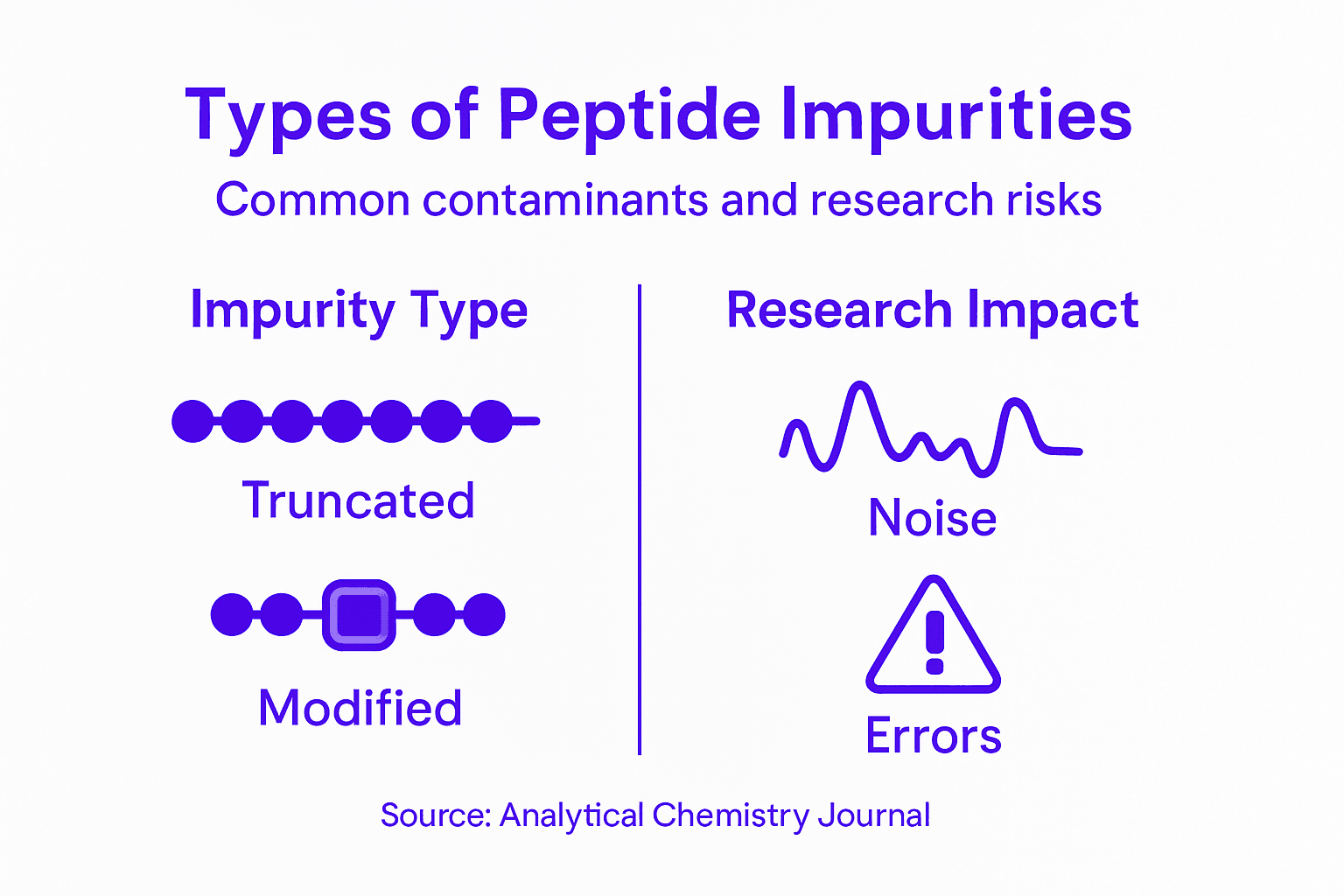
Molecular Composition Matters. Impurities can range from truncated peptide sequences to chemical modifications that fundamentally alter the molecule’s behavior. Even minor structural variations can significantly impact experimental results, making rigorous purity verification essential for reliable scientific research.
Pro tip: Always request and carefully review a detailed Certificate of Analysis (COA) that provides comprehensive purity data beyond a simple percentage rating.
Types of Impurities Found in Peptides
Peptide impurities represent complex molecular variations that can significantly compromise research accuracy. Common impurity mechanisms reveal a range of structural alterations that emerge during peptide synthesis, storage, and handling processes. Understanding these impurities is crucial for researchers seeking precise experimental outcomes.
Researchers typically encounter several primary categories of peptide impurities:
Homo- and Heterodimers: Molecular combinations that can alter peptide interactions
Pyroglutamate Formation: Chemical modifications changing peptide structure
Oxidation: Chemical transformations affecting molecular stability
Deamidation: Amino acid modifications that impact peptide functionality
Amino Acid Deletions: Structural losses during synthesis or degradation
Each impurity type represents a potential source of experimental variability. Trace amounts of these contaminants can fundamentally change peptide behavior, making rigorous purity standards essential for reproducible research. Mass spectrometry and high-performance liquid chromatography enable detailed identification of these molecular variations, providing researchers with comprehensive insights into peptide composition.
Here’s a quick summary of common peptide impurity types and their laboratory consequences:
Impurity Type | Structural Change | Possible Research Impact |
Homo-/Heterodimerization | Altered multimeric forms | Disrupted molecular binding |
Pyroglutamate Formation | Cyclized N-terminal modification | Changed peptide conformation |
Oxidation | Addition of oxygen atoms | Loss of functional activity |
Deamidation | Conversion of amide functions | Reduced peptide stability |
Amino Acid Deletion | Missing residues in sequence | Modified bioactivity and specificity |
Molecular Integrity Matters. Even minuscule impurities can introduce significant experimental noise, potentially invalidating research conclusions. Researchers must approach peptide analysis with meticulous attention to potential structural deviations and their potential impacts.
Pro tip: Implement multiple analytical techniques to cross-verify peptide purity and characterize potential impurities before commencing critical research experiments.
How Peptide Purity Impacts Research Validity
Peptide purity serves as a critical foundation for scientific reproducibility, directly influencing the reliability and interpretability of experimental outcomes. Laboratory peptide accuracy determines whether research findings represent genuine biological phenomena or artifacts introduced by impure molecular samples.
Research validity can be compromised through several key mechanisms related to peptide impurities:
Molecular Misrepresentation: Impure peptides can generate false or misleading experimental results
Signal Interference: Contaminants may create unexpected interactions or biochemical responses
Statistical Variability: Inconsistent peptide composition increases experimental noise
Reproducibility Challenges: Impure samples make replicating experiments significantly more difficult
Biological Pathway Disruption: Structural variations can fundamentally alter expected molecular behaviors
Scientific integrity demands meticulous attention to peptide composition. Verification techniques like mass spectrometry and chromatographic analysis become essential tools in identifying and mitigating potential sources of experimental error. Researchers must recognize that even trace impurities can substantially skew experimental outcomes, potentially invalidating months or years of systematic investigation.

Precision Matters. The smallest molecular deviation can transform research conclusions, underscoring the paramount importance of rigorous peptide characterization and validation processes.
Pro tip: Develop a standardized protocol for peptide purity assessment that includes multiple independent verification methods to ensure comprehensive molecular analysis.
Analyzing and Verifying Peptide Purity
Peptide purity verification requires a comprehensive, multi-step approach that combines advanced analytical techniques to ensure molecular integrity. Quality verification standards demand rigorous methodological precision to validate peptide composition and eliminate potential experimental variables.
Researchers typically employ several critical analytical methods to assess peptide purity:
High-Performance Liquid Chromatography (HPLC): Separates and quantifies molecular components
Mass Spectrometry: Determines exact molecular weight and identifies impurities
Amino Acid Analysis: Confirms peptide sequence and composition
Reverse-Phase Chromatography: Evaluates peptide hydrophobicity and structural characteristics
Nuclear Magnetic Resonance (NMR) Spectroscopy: Provides detailed structural insights
Each analytical technique offers unique insights into peptide molecular composition. Labeling standards play a crucial role in ensuring consistent and accurate reporting of purity metrics, enabling researchers to compare and validate experimental results across different laboratories and research contexts.
The following table compares key peptide purity assessment techniques and their main benefits:
Analytical Method | Primary Function | Major Advantage |
HPLC | Separates sample components | High sensitivity for impurity detection |
Mass Spectrometry | Determines molecular mass | Identifies structure-specific changes |
Amino Acid Analysis | Confirms sequence composition | Verifies peptide composition directly |
NMR Spectroscopy | Analyzes 3D molecular structure | Provides detailed conformational insight |
Precision is Paramount. Sophisticated analytical approaches transform peptide characterization from simple percentage measurements to comprehensive molecular profiling, allowing researchers to detect even minute variations that could impact experimental outcomes.
Pro tip: Develop a standardized multi-technique verification protocol that combines at least three independent analytical methods to ensure comprehensive peptide characterization.
Risks of Using Impure Peptides in Research
Peptide impurities introduce significant scientific and experimental risks that can fundamentally undermine research integrity. Impurity risk assessment requires comprehensive evaluation of molecular variations that could dramatically alter experimental outcomes and biological responses.
Researchers face multiple critical risks when working with impure peptides:
Immunogenic Responses: Unexpected immune system activation
Experimental Variability: Inconsistent and unreproducible results
Biological Pathway Disruption: Altered molecular interactions
Toxicity Potential: Unintended cellular or systemic reactions
Data Misinterpretation: Compromised scientific conclusions
Peptide impurity evaluation demands sophisticated analytical techniques to detect potential molecular variations that could compromise research validity. Even minor structural deviations can trigger substantial changes in peptide behavior, potentially invalidating months or years of systematic investigation.
Precision Matters. The smallest molecular imperfection can transform research conclusions, underscoring the critical importance of rigorous peptide characterization and validation processes.
Pro tip: Implement a multi-stage verification protocol that combines at least three independent analytical methods to comprehensively assess peptide molecular integrity.
Legal, Compliance, and Supplier Standards for Purity
Research-grade peptide procurement demands rigorous adherence to comprehensive legal and quality standards that protect scientific integrity. Quality management standards establish critical frameworks for ensuring peptide reliability across research environments.
Researchers must evaluate suppliers based on several essential compliance criteria:
Good Manufacturing Practice (GMP) Certification: Ensures consistent production quality
Third-Party Laboratory Testing: Provides independent verification of molecular characteristics
Comprehensive Documentation: Includes detailed Certificates of Analysis (COAs)
Transparent Sourcing Protocols: Demonstrates rigorous quality control processes
Regulatory Compliance: Meets international research and pharmaceutical standards
Research-only peptide standards require meticulous attention to manufacturing transparency, batch consistency, and comprehensive documentation. Suppliers must demonstrate not just molecular purity, but also provide robust evidence of their quality assurance mechanisms.
Accountability Matters. Scientific progress depends on suppliers who prioritize uncompromising standards and provide researchers with the highest quality molecular resources.
Pro tip: Request comprehensive documentation, including full Certificates of Analysis, before finalizing any peptide procurement to ensure complete transparency and research reliability.
Ensure Research Reliability with Premium Peptide Purity
Achieving accurate and reproducible scientific results depends on sourcing peptides with verified high purity. This article highlights the challenges of peptide impurities and their impact on research validity, emphasizing the importance of molecular integrity and detailed Certificates of Analysis (COAs). Researchers seeking peptides that meet rigorous purity standards and comply with research-only regulations will find trusted solutions at Premier Aminos.
Explore our curated selection of high-quality research peptides including Tesamorelin, BPC-157, and Ipamorelin in the Peptides | Premier Aminos category. Every batch is backed by third-party lab testing with detailed documentation to ensure you receive products with ≥99% purity. Don’t compromise your experimental outcomes with impure supplies. Visit Premier Aminos today and safeguard your laboratory’s success by ordering peptides that meet the highest scientific standards and benefit from fast U.S. shipping and bulk purchasing options. Take control of your research accuracy now.
Frequently Asked Questions
What does peptide purity mean in research?
Peptide purity refers to the proportion of the target peptide molecule in a sample as compared to impurities. High purity levels are critical for ensuring accurate and reproducible experimental outcomes.
How is peptide purity assessed and verified?
Peptide purity is assessed using advanced analytical techniques, such as high-performance liquid chromatography (HPLC) and mass spectrometry, which help identify both the purity percentage and the nature of any contaminants.
What types of impurities can affect peptide research outcomes?
Common types of peptide impurities include homo- and heterodimers, pyroglutamate formation, oxidation, deamidation, and amino acid deletions. These can significantly alter peptide behavior and impact experimental results.
Why is it essential to ensure high peptide purity in scientific experiments?
Ensuring high peptide purity is vital for maintaining scientific integrity, as impurities can lead to misleading results, signal interference, and difficulties in reproducing experiments. Rigorous verification of purity helps to validate research conclusions.
Recommended


Comments